
Key Takeaways from Nature Futures @ 'GoNaturePositive!'
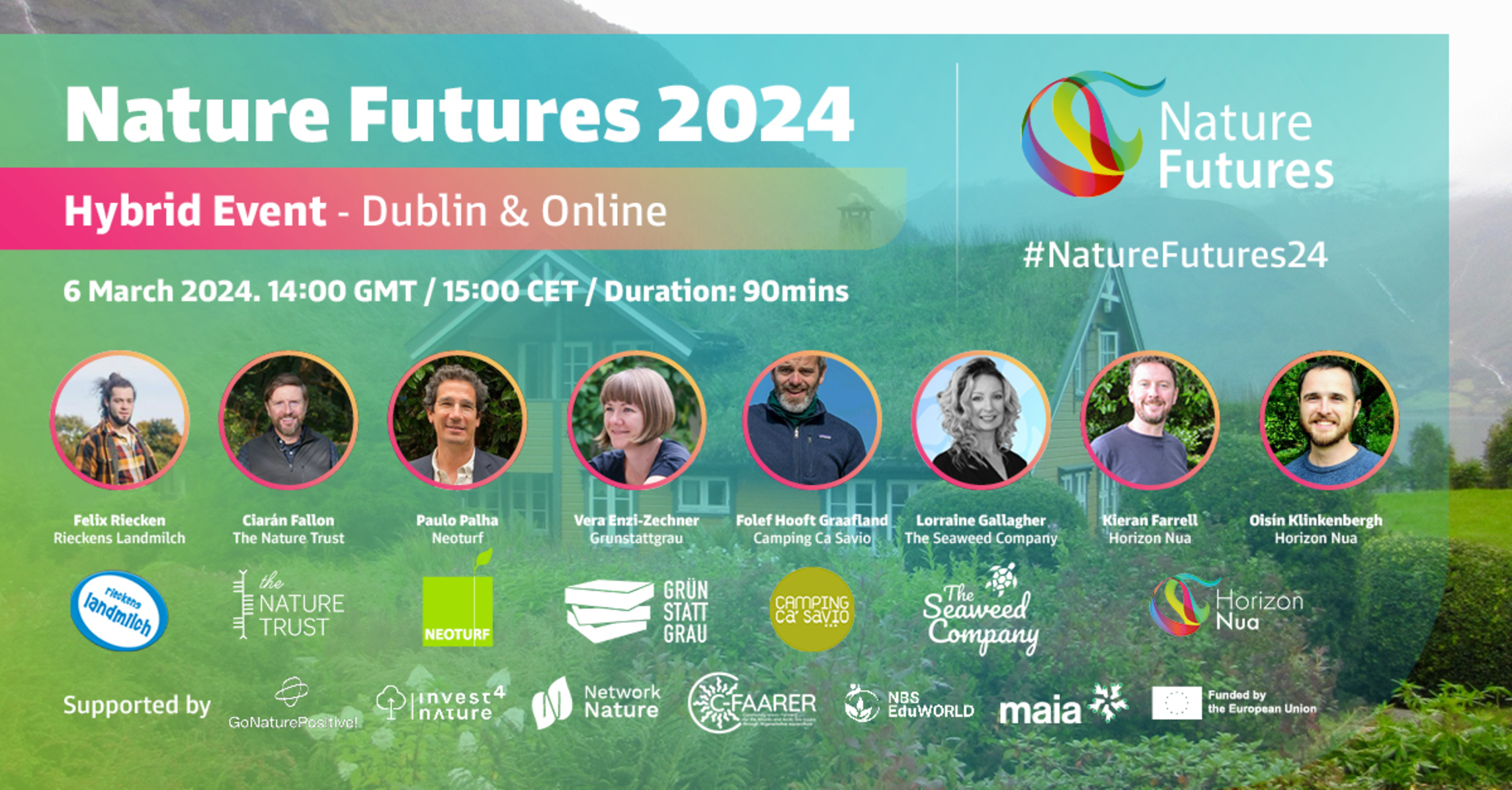
Nature Futures 2024 brought together industry leading entrepreneurs from across regenerative agriculture, forestry & tourism as well as green buildings and the blue economy to discuss the challenges & opportunities facing nature-based enterprises in their respective sectors and the scaling of nature-based solutions as a whole.
The event, set in the wider context of the GoNaturePositive! project launch, provided a fitting landscape to explore how nature-based enterprises are spearheading the transition to a nature-positive economy and shone a light on some key market growth indicators as well as some of the barriers & challenges currently blocking the path to a nature positive future.
Through insightful discussions, key themes emerged and we’ve done our best to highlight those key takeaways and themes below. You can also find the full length recording of each session on our YouTube channel, and finally, keep an eye on our events page for upcoming webinars where we will dive deeper into some of the topics that emerged.
Regenerative Tourism & The Blue Economy
-
More Growth: Speaking about regenerative tourism, Folef Hooft Graafland from Camping Ca Savio, stressed that the tourism industry doesn’t need more growth or emphasis on tourist numbers. It requires deeper connections, partnerships and a systemic approach to finding sustainable solutions that benefit the local environment, communities and economy together. - Behavioural Change is Key: The importance of behavioural and mindset change was highlighted by Lorraine Gallagher from The Seaweed Company. While demand for seaweed is on the rise, consumer preferences and knowledge of how to practically incorporate seaweed into their diets remains a challenge. This was echoed by Folef in relation to changing guest behaviour towards more sustainable or regenerative practices.
“We are trying to not impose anything on them. People are on holiday with us. They are not at school. You do not want to tell them what to do. A small example my colleague always gives is, we can have the most sustainable showers and toilet blocks, but if a guest still comes and showers 5 times a day, we have not resolved anything yet.” Folef Hooft Graafland, Camping Ca Savio
So while behavioural change is key, it takes time, effort and significant resources to effect this change. This is a cost that cannot be borne entirely by small businesses like Camping Ca Savio or The Seaweed Company who are forging ahead in the transition to a nature positive economy.
- Collaboration & Synergy: Moving beyond behavioural change, both sectors identified potential synergies and opportunities for collaboration. One such example being the potential for sharing seasonal staff between farming and tourism sectors to address employment challenges.
- Systems Change: Finally, we discussed the potential for approaching these challenges from a systems thinking perspective and involving an interdisciplinary approach to creating awareness of this need for not just behavioural change but systems wide change.
Regenerative Agriculture & Forestry
- Regenerative Agriculture and Forestry as Ecosystem Stewardship: Both Felix Riecken (Rieckens Landmilch) and Ciaran Fallon (The Nature Trust) emphasised the importance of reframing their roles as stewards of ecosystems rather than simply farmers or foresters. This perspective underscores their commitment to nurturing and restoring natural systems while producing food and wood.
- Challenges and Opportunities in Scaling Regenerative Practices: Felix highlighted the challenges of transitioning to regenerative agriculture, including knowledge gaps, generational issues, and funding limitations. Similarly, Ciaran discussed staffing shortages, regulatory hurdles, and the need for technological advancements in forestry. However, both speakers also emphasised the progress being made and the potential for nature-based enterprises to address these challenges.
“I think regulation is also a challenge, because a lot of the people that we are applying to for consents are not used to dealing with nature-based projects and very often projects we're doing are quite large. So, they trigger environmental assessments. And these people are used to dealing with the built environment, buildings like this, or roads or bridges, and nature solutions are new to them. I found them wonderful in terms of their openness and their willingness to engage, but they simply haven't got that level of expertise yet. So, we have got to build that out in this country.” Ciaran
- Holistic Approach to Sustainability: Felix outlined his farm's holistic approach to sustainability, which encompasses environmental, social, and economic dimensions. By implementing practices such as organic farming, agroforestry, and direct sales to consumers, he demonstrates how regenerative agriculture can benefit ecosystems, communities, and livelihoods.
- Collaboration and Advocacy: Both speakers emphasised the importance of collaboration and advocacy in driving the transition to regenerative practices. Felix mentioned his involvement with the European Alliance for Regenerative Agriculture (EARA), which advocates for policy change and promotes regenerative principles. Similarly, Ciaran discussed the establishment of Coillte Nature and the Nature Trust as platforms for fundraising, project implementation, and knowledge sharing in the forestry sector.
- Inspiring Change Through Farmer-to-Farmer Communication: Felix highlighted the significance of peer-to-peer communication in inspiring other farmers to adopt regenerative practices. He stressed the importance of farmers sharing their experiences and successes with their peers, rather than being lectured by external entities. This approach fosters a sense of community and solidarity among farmers, facilitating the exchange of knowledge and ideas.
Green Buildings & Water Management
- Water Management in Urban Areas: Paulo Palha (Neoturf) highlighted the importance of water management in urban areas, emphasising the need to collect, reuse, and infiltrate water to mitigate water scarcity issues. He emphasised the connection between plants and water and advocated for strategies to collect rainwater and reuse it for irrigation and groundwater replenishment.
- Role of Legislation and Policy: Paulo stressed the need for top-down approaches, including legislation and regulations, to enforce the adoption of nature-based solutions in urban areas. He compared it to the implementation of fire safety systems in buildings, emphasising the importance of prioritising environmental concerns.
- Education and Skills Development: Paulo discussed the role of organisations like the European Federation for Green Walls and Green Roofs Associations (EFB) in providing guidelines and education for professionals in the industry. He emphasised the importance of training skilled professionals to ensure the proper design and maintenance of green infrastructure.
“…we are talking about the need to have more professionals on these issues (Urban NbS) and there is a lack right now. And let's remember this (sector) is growing exponentially. We will need, and universities and schools will need to make a huge effort to have more experts on these issues. Otherwise, what can happen is that you will have all the environmental positivity to install these solutions and you will not have enough skilled people to deliver it properly, and to have the performance that you expect from these solutions.” Paulo Palha, Neoturf
- Increasing Demand for Nature-Based Solutions: Paulo mentioned an increase in demand for nature-based solutions, particularly since the COVID-19 pandemic. He noted that businesses in the industry are experiencing growth across Europe, indicating a positive trend towards sustainability in urban development.
That was all we had time for at Nature Futures for 2024 but we look forward to hosting more nature-based entrepreneurs in March next year. If you'd like to highlight the challenges and opportunities facing your sector in relation to the scaling of nature-based solutions, please get in contact with us.
Finally, the first speaker at Nature Futures was Oisin Klinkenbergh who presented the interim findings of research he is conducting into nature-based enterprises as part of the Invest4Nature project. You can read an article about the findings and see Oisin's slides here or watch his 10 minute presentation below.