

From Nature-Based Solutions to Nature-Based Economy
By McQuaid, S., Rhodes, ML., Andersson, T., Croci, E., Feichtinger-Hofer, M., Grosjean, M., Lueck, A. E., Kooijman, E., Lucchitta, B., Rizzi, D., Reil, A. and Schante, J. (2021) From Nature-Based Solutions to the Nature-Based Economy. Nature-based Economy Working Group of EC Task Force III on Nature Based Solutions. https://doi.org/10.5281/zenodo.5055605
Short Summary:
Nature-based solutions provide multiple benefits for biodiversity. While much focus to date has been on the environmental or social benefits of NBS, less attention has been paid to their economic potential and their role in a just transition to the type of sustainable economy envisaged in the European Green Deal. The Draft White Paper ‘From Nature-based Solutions to the Nature-Based Economy’ by McQuaid et al. (2021)[1] addresses this imbalance by proposing a paradigm shift - a new approach to valuing natural capital and to enabling its incorporation in the economic system. The Nature-based Economy “encompasses all production, exchange and consumption processes related to activities concerned with the protection, conservation, restoration and sustainable use of natural resources by consumers, industry and society at large”. Policy, regulation, institutions and/or cultural and community narratives relating to the rules and norms governing these activities are essential and integral elements of the production, consumption, and exchange processes of the nature-based economy (p. 2).
Nature-based Solutions - and related categories of economic activity - play a vital role in the Nature-based Economy. They can contribute to policy goals on sustainable economic growth within the context of climate change and biodiversity crises. A multiplicity of actors are involved in both demand and supply of NbS market sectors. Demand-led policies must take into account the nature of NbS as private goods and services (e.g., green buildings), public goods or services which can be enjoyed by many (e.g. parks), and so-called common pool resources, i.e. public goods where over-use of such resources would lead to negative effects (e.g. urban forests or nature reserves). On the supply side, specific policies need to be put in place to support the start-up and growth of nature-based enterprises as a key enabler on the supply side to meet increasing market demand for NbS. In addition, NbS specific barriers affecting demand and supply need to be addressed: measuring effectiveness, challenges related to hybrid governance and financing, and a myriad of challenges related to public procurement which has led to difficulties finding skilled private sector suppliers of NbS.
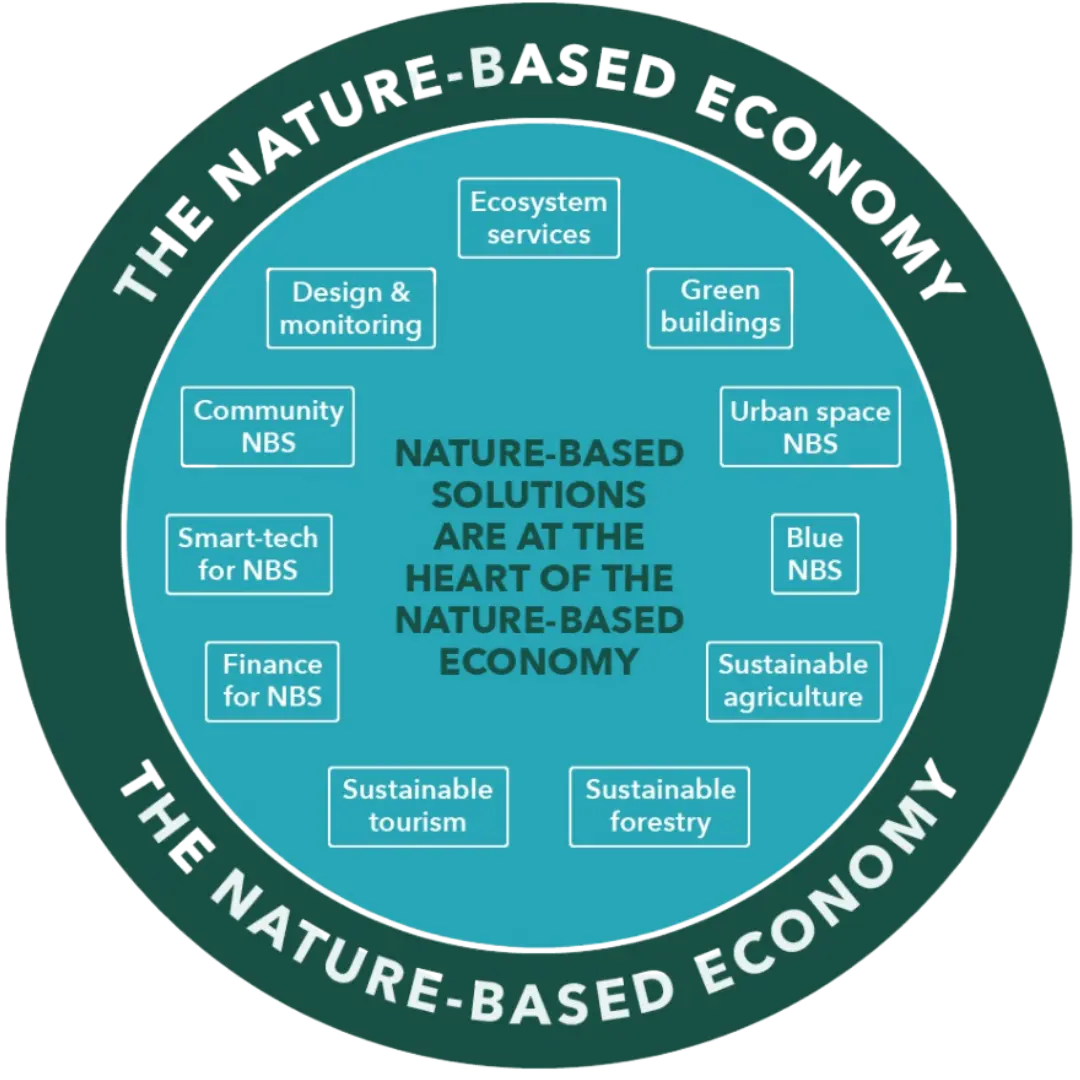
The market for NBS is at an early stage of development with much potential for growth. Clear patterns of growth in established NbS market sectors have been identified (e.g., green buildings), as well as new emerging sectors (e.g., smart tech for NbS, NbS for health and wellbeing). Macro-environmental factors influencing overall market growth include policy supports, economic valuation of NbS, technological drivers, inclusive governance, and increased awareness of social justice aspects of NbS development.
Policy measures are proposed at global, EU, national and local government levels. Within each level, systemic measures needed for long-term transformative change, and immediate short-term actions needed to boost the market for nature-based solutions are put forward. Local governments are identified as a key enabler in this process with regional partnerships playing an important role in knowledge sharing.
In line with UN targets, the overall recommendation of this publication is to triple investment in nature-based solutions (NBS) by 2030 and quadruple investment by 2050. This can be achieved by changing the ratio of investment from being predominantly public sector led now to securing more investment from the private sector. Increasing investment in nature-based solutions yields multiple benefits including new and sustainable high-quality jobs in nature-based enterprises, a just transition to a low carbon future, enhancing biodiversity, and combating climate change. With nature-based solutions at the heart of the nature-based economy, the recommendations put forward in the report will help us achieve transformative change.
Download the full white paper here
Download the executive summary here