
Spotlight on Nature-based Enterprise: Zoometrics
Free-roaming unmanaged cat colonies are among the leading drivers of urban bird and small-vertebrate decline worldwide, yet most municipalities manage them on paper, in silos, with no traceability and no verifiable outcomes. Built at the intersection of ecology, public administration and technology, Zoometrics is closing that gap.
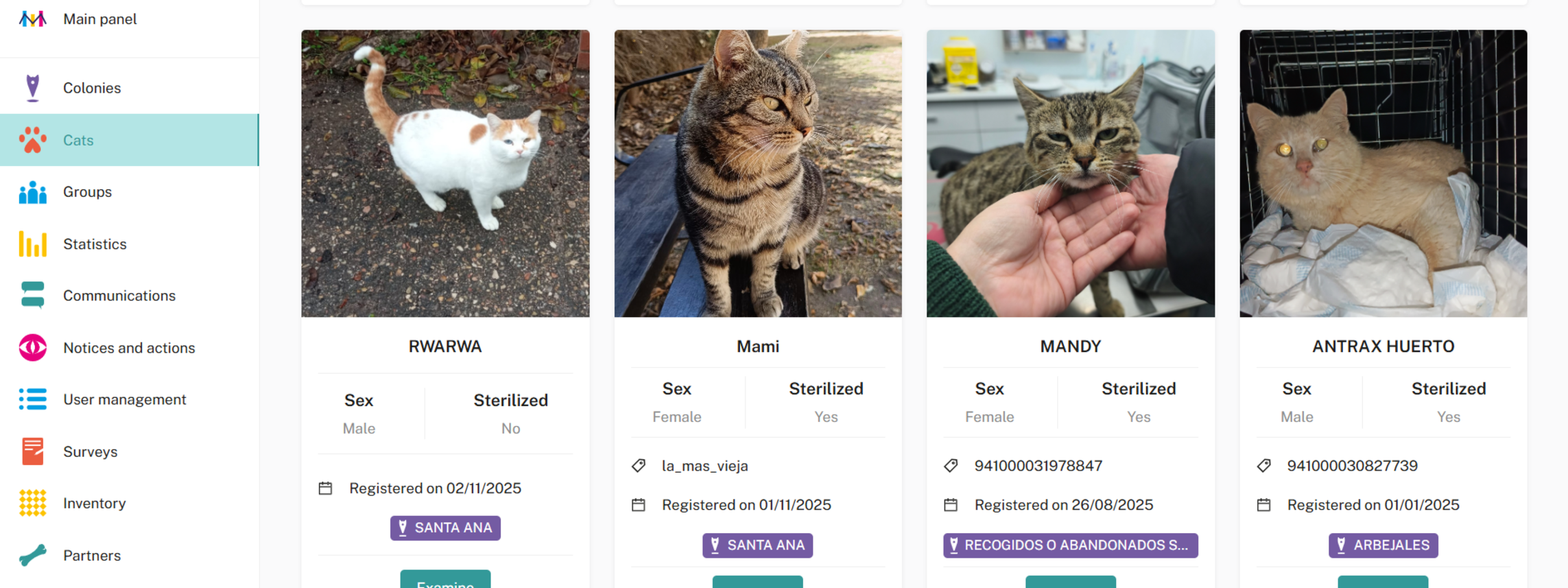
Its flagship product, Meow Metrics®, is the first GovTech SaaS platform for community-cat colony management under the humane TNVR methodology (Trap–Neuter–Vaccinate–Return). Every field action is recorded as a timestamped, geolocated, audit-ready data point. The result is a shared data infrastructure where volunteers manage colonies for free through the platform, while municipalities pay for compliance, coordination and verified reporting. It creates a nature-positive feedback loop: fewer unmanaged predators, measurably less pressure on urban wildlife, and a field-evidence record that biodiversity-credit frameworks can act on.
Spain's Law 7/2023 mandates all 8,131 municipalities to manage community-cat colonies humanely, and the EU welfare and traceability framework agreed in November 2025, with enforcement from 2028, extends this obligation Union-wide. Zoometrics built ahead of both, and the early impact is striking. In Córdoba, a city-wide TNVR programme covering 225 colonies and 2,400+ cats has achieved 95% sterilisation coverage and projects a 55% colony-population decline by 2028, preventing around 3,000 births at €0.62 per resident per year. At the Albolafia mill colony, bird remains in scat disappeared as the population dropped from 18 cats to 6, confirming measurable avifauna recovery. Deployments are also live in La Graciosa (Canary Islands, Natura 2000) and across nine districts in Hawaii through the Aloha Animal Alliance — the first supramunicipal deployment, demonstrating that the model scales beyond individual cities.
The business model is freemium SaaS designed for the specific dynamics of public-sector and civil-society adoption. Volunteers use the Explorer tier free of charge, generating field data; municipalities, associations and foundations subscribe annually (€300 to custom enterprise tiers). The freemium engine doubles as the go-to-market engine: volunteers prove the platform's value and pull their municipality into a paid account, shortening B2G sales cycles to 2–3 months. A second revenue layer is in development, aligning verified field outcomes with TNFD Metric BD-9 (invasive-species management) and EU Nature Restoration Law urban-biodiversity targets — positioning Zoometrics as the issuance data infrastructure for biodiversity credits post-2028.
Looking ahead, Zoometrics is expanding its modular suite: Wild Metrics® (distributed environmental intelligence on urban fauna and flora), Census Metrics® (digital companion-animal census bridging national microchip registries with citizen participation) and Ark Metrics® (citizen activation, turning passive supporters into verified field contributors). Each module deepens the same verified data layer under one municipal budget line, positioning Zoometrics as the shared biodiversity data infrastructure for European cities ahead of the 2028 EU mandate.
*As shared by the company