
Nature Futures 2023 - Key Event Takeaways
Thanks to everyone who attended the CNEP’s inaugural Nature Futures event. The feedback has been incredible and the success of the event is down to the calibre and expertise of the contributors. Our heartfelt thanks to them. We look forward to Nature Futures 2024 but in the meantime the key highlights from Nature Futures 2023 can be found below. Linked to the video recordings are included below as well.
Opening Address: Fleur Van Oostsroom-Brummel (European Commission)
Fleur opened the webinar acknowledging the increasing momentum of nature-based solutions and their contribution towards delivering a win-win for biodiversity and climate change adaptation.
Highlighting the role of nature-based enterprises (NBEs) in the building a nature-positive economy, Fleur emphasised how the EU is proud to be an early ambassador for NBS & NBEs and is committed to investing more in research and development to address finance barriers such as the valuation of nature or quantifying nature as a public good .
For more on Fleurs’ opening remarks, watch the video here. (10 minutes)
Session 1: Regenerative Tourism and Health & Wellbeing
In our first session, Ally Dragozet highlighted the regenerative tourism trends of mangrove restoration for coastal resilience in island nations and communities, funded through tourism associations, visitors and hotels. Ruth Spencer from the Marine Ecosystems Protected Area Trust in Antigua & Barbuda offered some real world examples of the impact projects that empower local communities can have when it comes to protected area management and restoration.
Shirley Gleeson and Anna Maria Palsdottir then spoke on the links between human health & wellbeing, the health of our ecosystems, climate change and biodiversity loss. From manicured gardens to flourishing wild landscapes, there is a scale of how much benefit we derive from our environment and this has become more evident as cities across the world look to redesign their urban green spaces.
Prescribing nature as therapy and medicine is becoming more prominent and 22% of attendees surveyed during the webinar have experience of this.
Watch the webinar recording here (18 minutes)
Session 2: Regenerative Forestry & Smart Tech
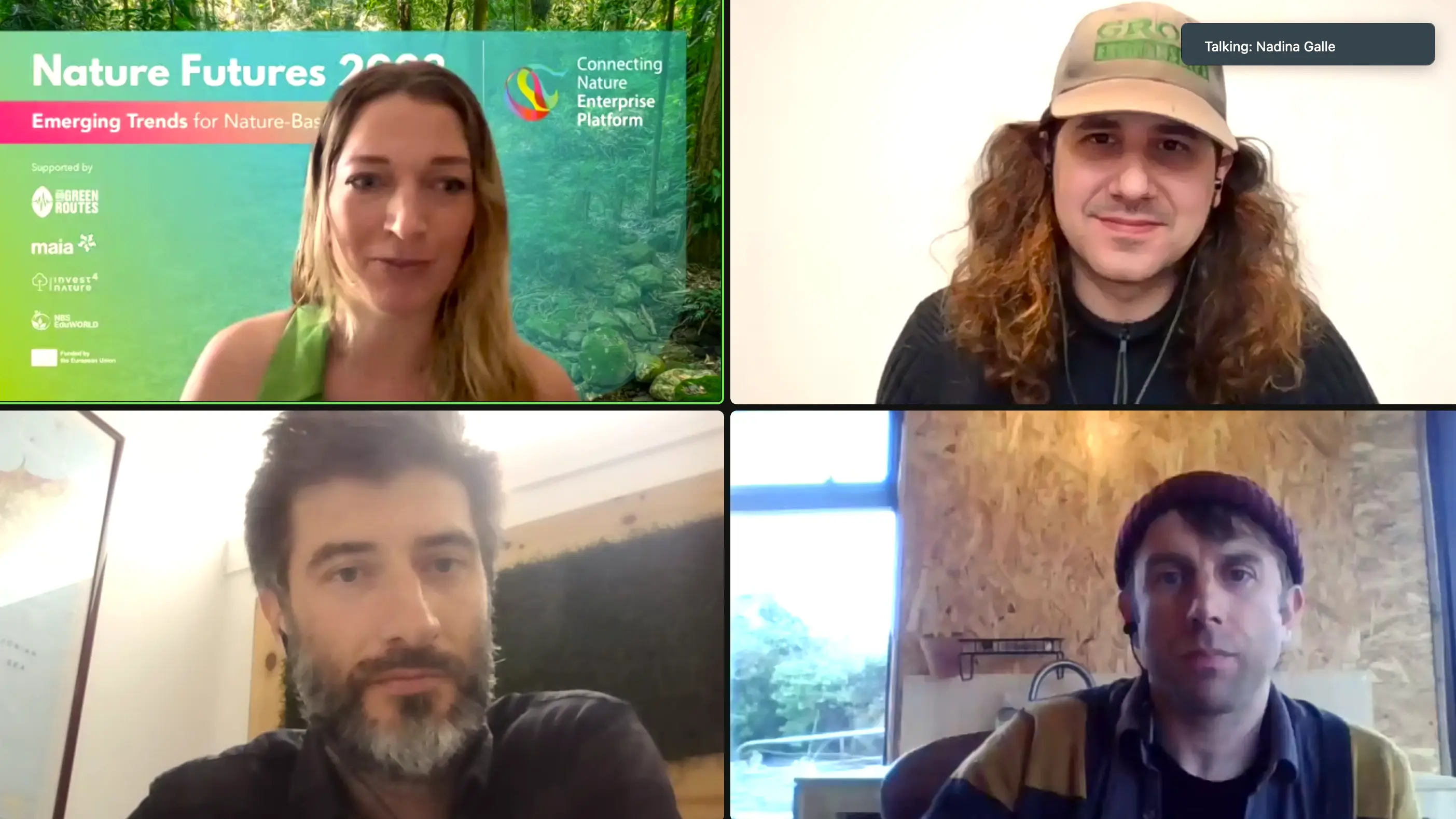
In our second session, Nadina Galle identified many emerging forms of smart tech - but the Internet of Nature is the key underpinning philosophy (check out the Internet of Nature podcast). Max Lerner from Emerging Technologies, New York City Dept. of Parks & Recreation talked about the big challenges around maintaining urban nature and keeping tabs on how effective the solutions are. Current methods of tree census are inefficient but there are lots of emerging smart tech solutions. There are also more and more important examples of citizen engagement and mobilisation via Smart Tech, be that in data gathering, monitoring and maintaining urban forest and gardens or otherwise.
Colm O'Driscoll advocated for the use of technology to raise awareness about the multiple values of woodlands and ecosystems services quickly and at large scale. We were joined by Ray Ó Foghlú from Hometree who has used drone technology to tell the story of primary and old growth woodlands and their importance in helping nature recovery across Ireland and beyond. Ray sees technology as a way of democratising income streams for landowners and allowing ownership to be retained locally. The challenge is aligning market needs with forestry conservation
Watch the webinar recording here (18 minutes)
Session 3: Ecosystem Restoration & Regenerative Agriculture
In our third session, Paul Jepson from Ecosulis & CreditNature noted a high level policy shift from defensive protection of biodiversity to ecosystem restoration. Rewilding is a key trend with a practical European version emerging and there is increasing corporate interest. He talked about the design of nature markets and credits for ecosystem recovery as well as how to create digital assets, building in verification - A 'Storified' value of nature credits.
Philippe Birker is a man on a mission to scale regenerative farming across Europe and is a co-founder of Climate Farmers. Philippe spoke about the hype around regenerative agriculture following the release of Kiss the Ground in 2020 but highlights there is still a challenge in scaling this practice and meeting the produce demand created by this hype. Some of the possible reasons presented were, 1. Established ageing farmers are reluctant to change their ways, 2. Younger people don’t view farming as an attractive career, 3. A Lack of access to knowledge, and 4. Lack of transition financing. He points out that lots of big food companies are interested but these problems remain and he would love to see incentives paying farmers for biodiversity rather than for yield.
Watch the webinar recording here (18 minutes)
Session 4: Urban Landscapes & Community Engagement
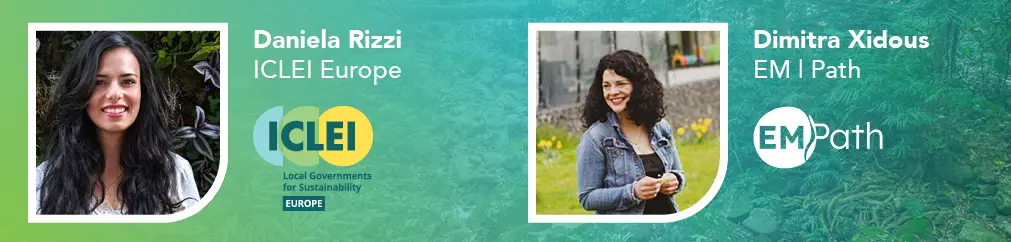
CNEPs Ambassador for our Urban Landscapes Community, Roisin Byrne introduced Daniela Rizzi from ICLEI Europe. Daniela spoke on the New European Bauhaus initiative and its principles of inclusivity, aesthetics and sustainability but points out how nature and nature-based solutions are still missing from this conversation. Paula Vandergert also introduced Dimitra Xidous rom EM|Path who spoke on the power of meaningful community engagement to bridge that gap and the importance of creating safe spaces for citizens to share deep feelings about nature.
Watch the webinar recording here (19 minutes)
Session 5: Green Buildings & Water Management
In our final session, our new Green Buildings Community Ambassador and visionary for the integration of ecosystem services and nature-based solutions in building design, Moein Nodehi of BIOTONOMY talked about “function over fashion” and the need to help companies use nature ethically and as a function versus a token decoration as part of a sustainability policy.
He was joined by International Water Association Fellow, Fabio Masi from IRIDRA in Italy who highlighted the incoming Water Reuse Directive and the need to treat black water as well as grey water. As project co-author on over 550 designs for constructed wetlands worldwide, Fabio also spoke of the importance of integrating treatment at the level of farmers and buildings, rural and urban.
Watch the webinar recording here (16 minutes)
That’s only scratching the surface of what these speakers covered so we would encourage you to watch the videos. We hope to have these speakers and more join us over the coming months to cover some of these areas more in depth. Keep an eye on the events section of the platform.
Roll on #NatureFutures24!